
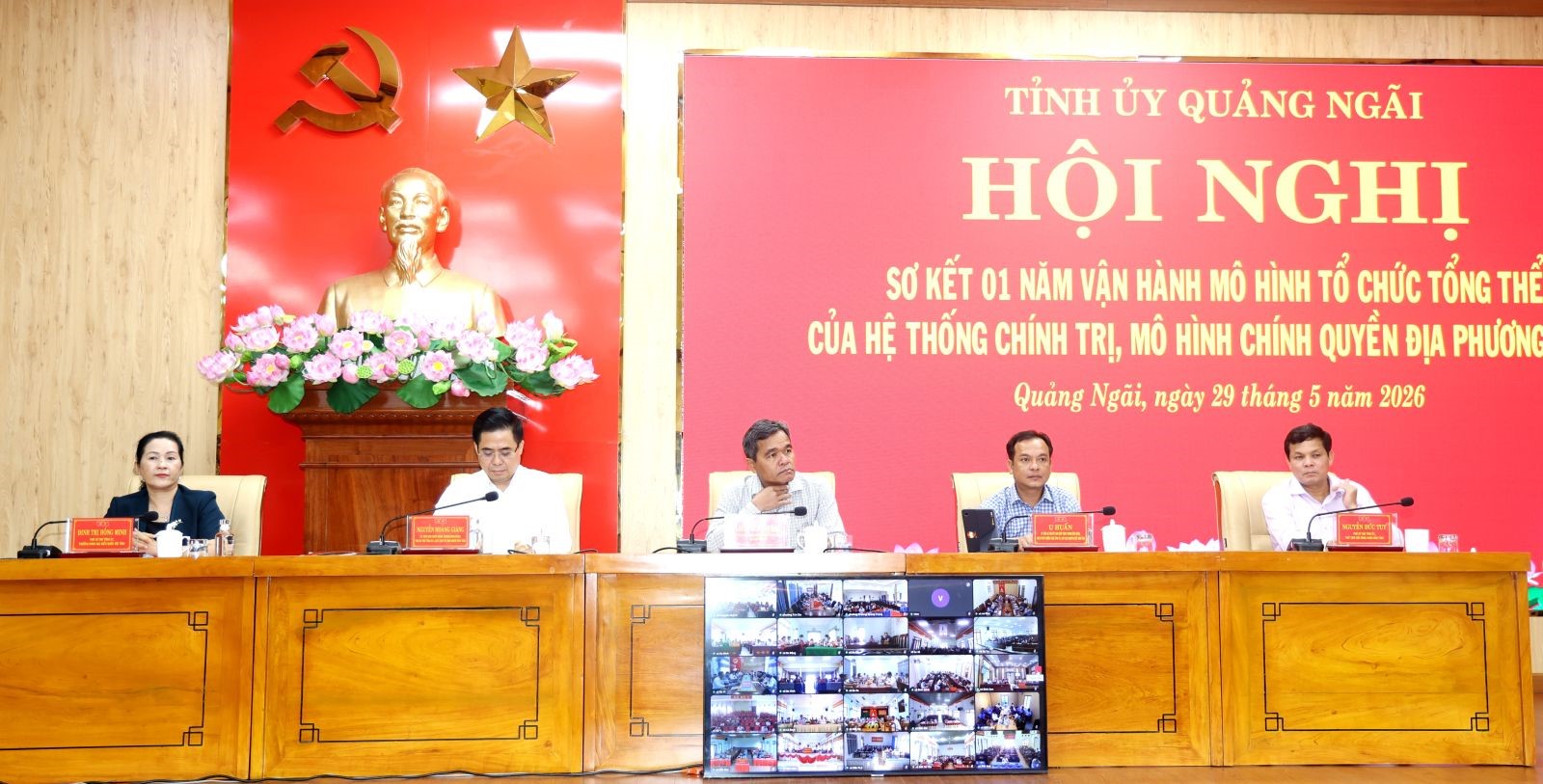
Quảng Ngãi reviews one year of two-tier local government model
The province has reported positive results after one year of operating under the two-tier local government model, with a streamlined administrative apparatus, improved governance efficiency and sustained socio-economic growth.
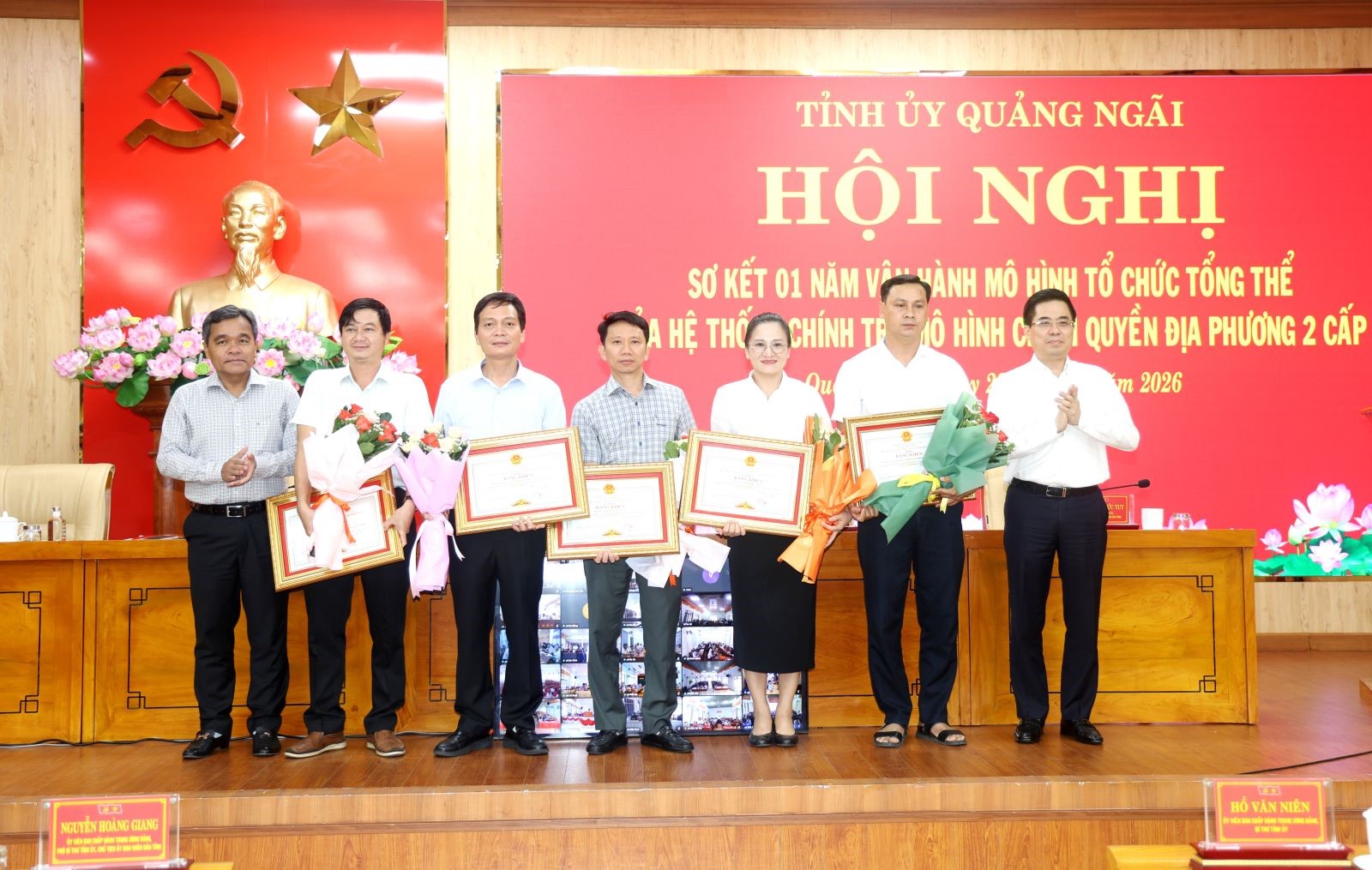
Addressing the conference, Secretary of the Provincial Party Committee, Hồ Văn Niên, said that after one year of implementing the two-tier local government model, Quảng Ngãi had achieved significant progress not only in organisational restructuring but also in governance thinking, leadership methods and the spirit of serving the people.
Despite numerous challenges and the absence of precedents, the entire political system had demonstrated a strong sense of responsibility, solidarity and determination in carrying out political tasks under the new model, he said.
Following the merger of Kon Tum Province and Quảng Ngãi Province into the new Quảng Ngãi Province, the locality now covers an area of more than 14,832 square kilometres and has a population of over 2.13 million people.
The province consists of 96 commune-level administrative units.
The provincial Party organisation currently oversees 100 subordinate Party organisations, 985 grassroots Party cells and organisations, and 94,529 Party members.
Provincial leaders noted that despite a substantial workload and increasingly demanding tasks, the newly reorganised administrative apparatus has gradually operated in a stable and effective manner, demonstrating the appropriateness and timeliness of the Party and State’s policy on streamlining and restructuring the political system.

ACHIEVEMENTS
A key achievement over the past year has been the comprehensive and determined implementation of organisational restructuring in line with central guidelines.
The political system has continued to operate smoothly, ensuring that public services and State management activities were not disrupted during the transition process.
Following the restructuring, agencies across the political system have become leaner and more streamlined, with a reduction in intermediary units and departments.
Functions and responsibilities have been reviewed and refined to ensure clear accountability, defined tasks, specific timelines, measurable outcomes and well-defined authority.
The province also promptly issued a range of plans, regulations and decentralisation mechanisms, providing an important legal foundation for the effective operation of the new governance model.
Communication and awareness-raising efforts were widely carried out, helping build consensus among officials, Party members and the public.
Despite a heavier workload and higher requirements under the new model, officials, civil servants and public employees at all levels have actively adapted to the changes while maintaining a strong sense of responsibility and improving the quality of public services.
The grassroots political system has continued to be strengthened, while commune-level administrations have generally maintained stable operations.
Administrative reform and digital transformation have been accelerated, contributing to more efficient governance and public service delivery.
Meanwhile, national defence, security and social order have remained firmly safeguarded.

Socio-economic development records positive outcomes
Alongside organisational restructuring, Quảng Ngãi has continued to achieve encouraging socio-economic results.
In 2025, the province's economy was estimated at nearly VNĐ192 trillion (US$7.4 billion) at current prices.
Gross Regional Domestic Product (GRDP) expanded by 10.02 per cent, ranking first among the six south-central and Central Highlands provinces, sixth nationwide among 34 provinces and centrally governed cities, and placing Quảng Ngãi among the six localities posting double-digit growth.
State budget revenue exceeded VNĐ36 trillion, surpassing the target assigned by the central government.
GRDP per capita reached more than VNĐ100 million, up over 10 per cent compared to 2024.
The province also continued to effectively implement programmes in culture, education, healthcare and social welfare, contributing to gradual improvements in living standards.
National defence and security remained firmly maintained.
In the first quarter of 2026, the province's GRDP was estimated at VNĐ35.8 trillion, representing a year-on-year increase of 8.24 per cent.
Governance efficiency and the quality of public services also improved significantly during the first year of implementing the new model.
Administrative procedures were processed in a stable and uninterrupted manner, with no major bottlenecks reported during the transition.
Digital transformation remained a key priority, with electronic administration systems and digital work-processing platforms deployed across the province.
The initiatives have helped reduce processing time and costs for both residents and businesses while enhancing the effectiveness of public administration.
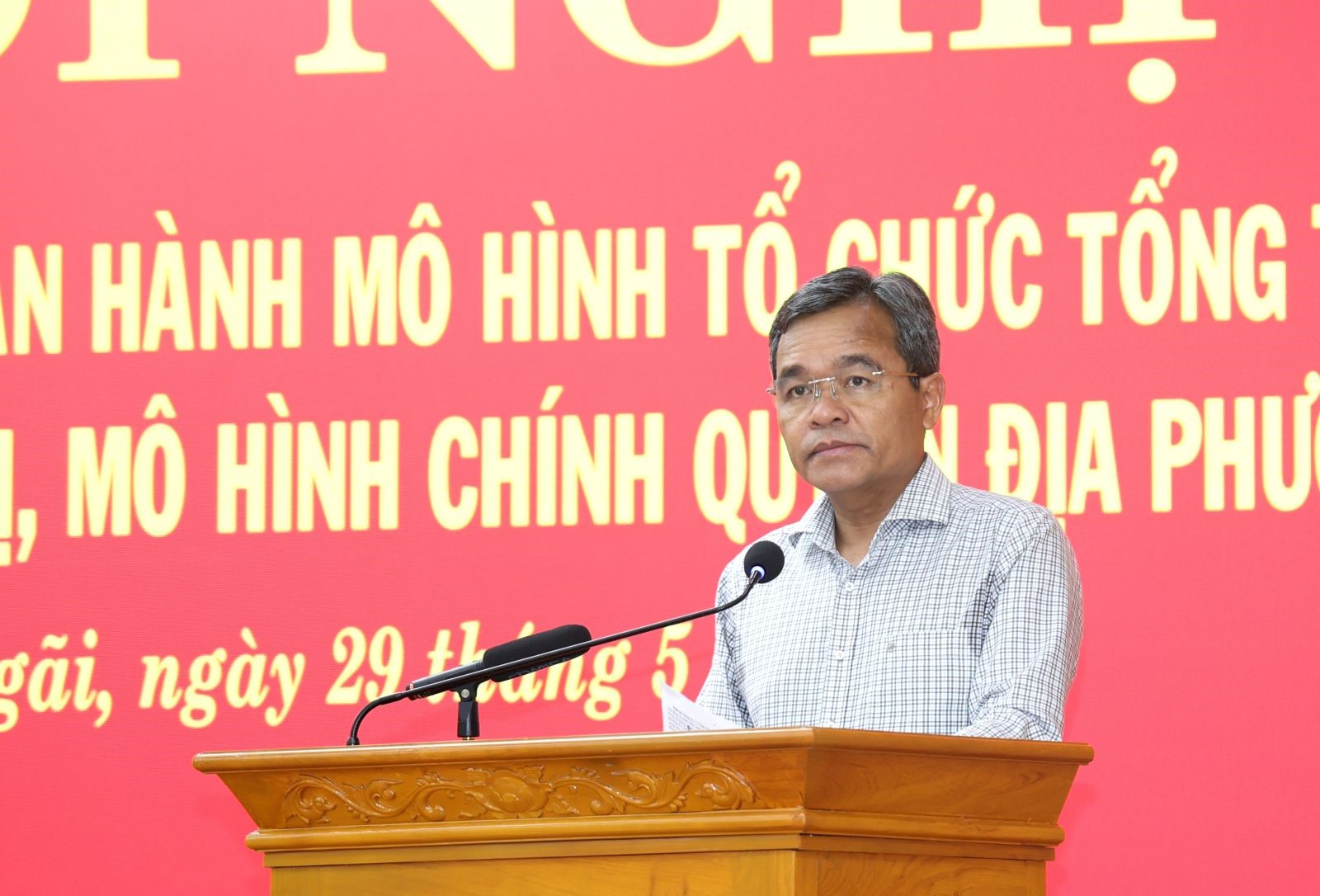
Secretary of the Quảng Ngãi Provincial Party Committee Hồ Văn Niên
Addressing bottlenecks in the new governance model
Despite the positive results achieved over the past year, Provincial Party Secretary Hồ Văn Niên noted that several challenges and shortcomings remain and require urgent attention.
While the organisational structure has largely stabilised, it has yet to be fully refined.
The delineation of functions, responsibilities and authority among different levels of government and sectors remains unclear in some areas, resulting in overlaps or gaps in task implementation.
The quality of officials and civil servants is uneven across localities.
At the commune level, shortages of specialised personnel in finance, land management, cadastral affairs, planning and construction have placed additional pressure on existing staff and created difficulties following the decentralisation and delegation of authority.
The management and disposal of redundant public assets also remain challenging.
Efforts to digitise, classify and archive official records have yet to meet requirements due to the large volume of accumulated documents, overloaded storage facilities and digitisation equipment, and delays in allocating supporting resources.
Information technology and telecommunications infrastructure have not been fully synchronised, with coverage gaps persisting in remote and mountainous areas.
Data connectivity and sharing between specialised databases and the province's common digital platforms remain limited, creating obstacles to the development of digital government and the provision of online public services.
Provincial leaders stressed the need for continued efforts to address these bottlenecks, improve institutional coordination and strengthen the capacity of grassroots administrations to ensure the effective and sustainable operation of the two-tier local government model.
Looking ahead, Provincial Party Secretary Hồ Văn Niên called on Party committees and authorities at all levels to strengthen administrative discipline, maintain unity and solidarity, and strictly adhere to Party principles and working regulations.
He also urged continued efforts to promote the study and application of President Hồ Chí Minh’s ideology, morality and lifestyle in association with enhancing the exemplary role and responsibility of officials and Party members.
The provincial leader stressed the need to further review and refine the functions and responsibilities of agencies and units, while continuing to streamline internal structures, reduce the number of deputy positions and implement substantive payroll reductions.
Particular attention should be paid to effectively implementing the “Year of Grassroots Cadres” initiative, strengthening digital skills and modern governance capacity among commune-level officials, and developing mechanisms to attract high-quality human resources in key fields such as information technology, finance, land administration and planning.
The province will also continue accelerating digital transformation and the application of information technology in public administration.
Priorities include speeding up the digitisation of records and documents, enhancing connectivity and interoperability among specialised databases and the province’s shared digital platforms, and eliminating all remaining telecommunications coverage gaps across the province by 2026.
Hồ Văn Niên expressed confidence that with strong political determination, solidarity and coordinated action throughout the political system, Quảng Ngãi would continue to improve the effectiveness of the two-tier local government model, creating new momentum for rapid and sustainable socio-economic development in the years ahead.
The Provincial Party Secretary also called for the swift implementation of plans to reorganise villages and residential groups in line with directives from the central authorities and the Provincial Party Standing Committee.
The process, he said, must be carried out objectively, scientifically and in accordance with local conditions, while ensuring broad public consensus before any decisions are made.
The Party Committee of the Provincial People’s Committee was tasked with directing the Provincial People’s Committee to proactively review and propose solutions to the central government to address legal inconsistencies and overlaps affecting the operation of the two-tier local government model.
At the same time, provincial authorities were urged to mobilise additional resources for digital transformation, science and technology development, and the digitisation of administrative records and archives, creating new momentum for socio-economic growth.
Concluding the conference, Hồ Văn Niên said that the achievements recorded during the first year of implementing the new organisational model reflected the strong unity, determination and collective efforts of the entire political system, as well as officials and civil servants across the province.
However, he noted that significant challenges remain ahead, with increasing demands placed on grassroots administrations.
He called on Party committees, authorities, officials and Party members at all levels to continue renewing their thinking, enhancing governance capacity and strengthening their sense of responsibility.
The provincial leader also stressed the need to overcome complacency and dependence, while maintaining a proactive and innovative approach in order to successfully achieve the province’s socio-economic development goals in the years ahead.

Written and designed by Minh Châu